English
 Español
 简体中文
The choice between extrusion moulding vs injection moulding is one of the first decisions an engineer faces when a new plastic part moves from drawing to production. Both processes use heat and pressure to shape thermoplastic materials, but they are fundamentally different in geometry, tooling, cost, and production flow. Choosing the wrong process can delay your launch, raise tooling costs, and force unnecessary secondary operations. The short conclusion is this: extrusion moulding is the right process for continuous, constant-cross-section profiles such as pipes, seals, and sheets, while injection moulding is the right process for discrete, three-dimensional parts with complex geometry, internal features, and tight tolerances.
Procurement teams and product developers need a comparison that goes beyond textbook definitions. The decision affects mould cost, piece price, lead time, material selection, surface finish, and even the type of supplier you should approach. A custom plastic injection moulding manufacturer designs steel moulds with runners, gates, and ejector pins. An extrusion manufacturer, by contrast, builds dies that create an open profile continuously. Many companies ask whether one process is cheaper than the other. The honest answer is that it depends on volume, material, and part geometry, so the tables and selection steps below are built around those variables.
Content
- 1 What Is Extrusion Moulding?
- 2 What Is Injection Moulding?
- 3 Extrusion Moulding vs Injection Moulding: Strengths at a Glance
- 4 Detailed Comparison of Extrusion Moulding vs Injection Moulding
- 5 Material Selection and Tolerances
- 6 How to Choose Between Extrusion Moulding and Injection Moulding
- 7 Common Applications and Product Examples
- 8 Working with a Custom Plastic Injection Moulding Manufacturer
- 9 Frequently Asked Questions
- 9.1 Which is cheaper: extrusion moulding vs injection moulding?
- 9.2 Can extrusion moulding produce hollow parts?
- 9.3 Can injection moulding produce long, continuous profiles?
- 9.4 Why are most product housings injection moulded instead of extruded?
- 9.5 Which process gives better dimensional accuracy?
- 9.6 What should a buyer ask before quoting a plastic part?
- 10 Final Recommendation: Match the Process to the Part
What Is Extrusion Moulding?
Extrusion moulding is a continuous process. A screw inside a heated barrel melts plastic pellets and pushes the melt through a die that has the cross-section of the desired profile. As the melt exits the die, it is cooled by water tanks or air and then cut to length or wound onto reels. The cross-section remains constant along the entire length, which makes extrusion ideal for pipes, tubes, window seals, cable coverings, sheets, films, and edge trims.
Main Characteristics of Extrusion
- Continuous output: production runs can continue for hours, reducing start-stop losses.
- Constant cross-section: the part must be drawn in a straight line; changes in thickness require a different die.
- Lower tooling complexity: die manufacturing is simpler than a multi-part injection mould, especially for simple profiles.
- Good material utilization: scrap can often be reground and returned to the process.
- Limited three-dimensional detail: features such as bosses, ribs, undercuts, threads, or side holes cannot be formed in-line and would need secondary operations.
Typical Extrusion Process Steps
- Plastic pellets are dried and loaded into the hopper.
- The screw rotates and pushes the material through heated barrel zones.
- The melt is homogenized and forced through the die.
- The profile is calibrated and cooled in a vacuum tank or water bath.
- Haul-off rollers pull the profile at a controlled speed.
- The profile is cut to length, coiled, or stacked.
Extrusion also demands attention to melt strength. The plastic must be able to hold its shape after leaving the die before it is fully cooled. Materials such as PVC, PP, PE, ABS, PS, and flexible TPE are common in extrusion lines, but the exact grade must be chosen for drawing behavior, die swell, and cooling shrinkage. In a B2B sourcing situation, an extrusion supplier will usually ask about the required profile dimensions, wall thickness, and material certification before quoting a production die.
What Is Injection Moulding?
Injection moulding is a batch or cyclical process that produces individual three-dimensional parts. Thermoplastic pellets are melted in a barrel, then a screw or plunger injects the melt into a closed mould under high pressure. The melt cools inside the mould cavity, the mould opens, ejector pins push the part out, and the cycle repeats. Every part is identical within the tolerance of the mould and the machine settings.
What Injection Moulding Does Well
- Complex geometry: side cores, sliders, inserts, ribs, bosses, snap fits, internal threads, and undercuts can be formed in the mould.
- Tight tolerances: typical commercial tolerances of ±0.1 mm are possible on many features, and tighter values can be held on small dimensions.
- Good surface finish: a polished or textured mould cavity transfers its surface directly to the part.
- High repeatability: once the process window is stable, thousands or millions of parts can be made with minimal variation.
- Automation: many injection moulding shops operate robots for part removal, insert loading, and in-mould assembly.
Typical Injection Moulding Process Steps
- The mould is designed and machined from hardened steel or pre-hardened steel.
- Plastic pellets are dried and melted in the barrel.
- The mould closes and the screw injects the melt into the cavity.
- Packing pressure holds the material as it cools and shrinks.
- The mould opens and ejector pins push the part out.
- The part is inspected, degated, and packed for delivery.
Because the mould encloses the plastic from all sides, injection moulding can create closed shapes that extrusion cannot. This is why housings, enclosures, connectors, fans, gears, and consumer product bodies are almost always injection moulded. The main drawback is the cost and lead time of the mould. A production mould for a medium-sized part can cost thousands of dollars and take several weeks to manufacture, so the process becomes most attractive when the annual volume is high enough to amortize that investment.
Extrusion Moulding vs Injection Moulding: Strengths at a Glance
The two processes serve different design spaces, so a side-by-side rating is useful only when you accept that "higher" is not always "better." A low score in continuous profile capability does not make injection moulding a poor process; it simply means the process is not built for that type of part. Likewise, a high score in complex geometry does not mean extrusion is a bad process; it means you would need additional operations to approach that result. The chart below rates the typical capabilities of each process from 1 to 5 based on common production experience. Use it as a quick sorting tool, not as a substitute for a design-for-manufacturing review.
The chart makes it clear that injection moulding dominates when the part has a closed, three-dimensional shape. Complex geometry and dimensional precision are its two strongest areas. Extrusion, on the other hand, is the clear leader for long, continuous profiles and simple cross-section efficiency. That split is not a coincidence; it follows directly from the way each process confines the plastic. Injection moulding traps the melt inside a rigid metal cavity, so detail and tolerance are copied with high fidelity. Extrusion lets the melt flow through an open die, so the profile is stable but side features cannot be formed. In terms of unit cost at high volume, injection moulding often becomes very competitive because the mould amortizes over thousands of parts. Extrusion remains more economical for many simple profiles because the die is less expensive and the line runs continuously. Tooling cost economy favors extrusion, but the gap is smaller than many buyers expect once you add calibration, pullers, cutters, and downstream equipment. Material utilization is generally excellent in both processes, but extrusion has an edge when the part is a solid or hollow profile because there are no runners or gates to regrind. Surface finish is usually more consistent in injection moulding because the polished mould surface is duplicated on every cycle. The conclusion from the chart is not that one process is superior, but that each process wins in a different design territory.
Detailed Comparison of Extrusion Moulding vs Injection Moulding
The following tables summarize the practical differences that matter to design engineers, purchasing managers, and quality teams. Some values are typical ranges because the actual result depends on the material, machine condition, tooling quality, and operator skill. Use these figures as a basis for discussion with a supplier, not as guaranteed specifications.
| Parameter | Extrusion Moulding | Injection Moulding |
|---|---|---|
| Process mode | Continuous | Cyclical |
| Part shape | Long profiles with constant cross-section | Discrete parts with three-dimensional details |
| Tooling type | Die with open profile | Closed mould with cavity and core |
| Tooling cost | Lower for simple profiles | Higher due to complexity, steel, and machining |
| Pressure | Lower, continuous screw pressure | High, rapid injection pressure |
| Typical output | Meters per minute | Parts per hour |
| Design complexity | Limited to two-dimensional cross-sections | High complexity with side cores and inserts |
| Tolerance | Loose to moderate | Tight and repeatable |
| Surface finish | Good but affected by die lines and draw marks | Excellent, from polished or textured cavities |
| Secondary operations | Cutting, punching, drilling, bending | Degating, machining for very tight features |
| Typical volume | Low to very high | Moderate to very high |
| Cost Driver | Extrusion Moulding | Injection Moulding |
|---|---|---|
| Die or mould cost | Lower for simple profiles | Higher for multi-cavity production tooling |
| Tooling lead time | Short | Longer, usually several weeks |
| Unit cost | Low for continuous profiles | Low at high volumes once mould is amortized |
| Minimum economical volume | Low | Moderate to high |
| Energy consumption | Lower per meter for simple profiles | Higher per cycle for large clamping forces |
| Material waste | Low, trim can be recycled | Runners and sprues can be reground |
| Labor content | Lower after line is stable | Moderate, often automated |
| Changeover cost | Low for same family | Higher due to mould change and process setup |
| Industry | Extrusion Examples | Injection Examples |
|---|---|---|
| Automotive | Weather strips, window seals, trim, hoses | Connectors, mirror housings, interior clips, radiator parts |
| Medical | Tubing, catheter shafts, surgical drape profiles | Syringe bodies, medical device housings, luer fittings |
| Consumer goods | Garden hoses, pipe insulation, edge guards | Power tool housings, appliance shells, kitchen products |
| Electrical | Cable insulation, conduit, wiring ducts | Plugs, sockets, connectors, adapters |
| Industrial | Machinery profiles, protective rails, sheets | Instrument housings, sensor enclosures, control boxes |
| IOT and smart hardware | Cable sleeves, antenna profiles | Robot shells, detector housings, display frames |
When you compare the tables side by side, one pattern appears. Extrusion moulding is essentially a process for two-dimensional profiles stretched into a third dimension by continuous movement. Injection moulding is a process for fully three-dimensional bodies formed by closing a mould around a cavity. A buyer should never select a process simply because one supplier quoted a lower price. The process must match the shape, function, and production volume of the part. If you are sourcing from a plastic moulding manufacturer, provide a complete 3D file, specify the expected annual quantity, and ask for a design-for-manufacturing review before committing to tooling.
Material Selection and Tolerances
Material selection is another major difference between extrusion moulding and injection moulding. Some materials process well in both systems, but the optimal grade can differ because the flow behavior, melt strength, and cooling conditions are not the same. The table below shows commonly used materials and their typical suitability for each process.
| Material | Extrusion Suitability | Injection Suitability | Notes |
|---|---|---|---|
| PVC | Excellent for pipes and profiles | Good, but requires stabilization | Used widely for building products and fittings |
| PE | Excellent for pipes, sheets, films | Excellent for containers, caps, tanks | Low cost, good chemical resistance |
| PP | Good for sheets, straps, profiles | Excellent for hinges, automotive parts, housings | Low density and good fatigue life |
| ABS | Good for profile extrusions | Excellent for electronics housings and consumer goods | Good balance of strength and finish |
| PC | Difficult but possible for sheets | Excellent for transparent structural parts | Must be dried before processing |
| PA | Good for tubing and profiles | Excellent for gears and mechanical parts | Moisture sensitive, useful in automotive |
| TPE / TPU | Excellent for soft seals and hoses | Good for overmolding and soft-touch parts | Hardness range is very wide |
Dimensional Tolerances
Tolerance expectations are different for every product. Injection moulding usually holds tighter tolerances because the material is contained inside a steel cavity until it solidifies. Extrusion tolerances are influenced by die design, cooling rate, haul-off speed, and the material's tendency to shrink or swell. For a first prototype or a low-volume order, an injection moulding supplier should still be able to hold commercial tolerances on critical features if the tool is built correctly.
| Feature | Extrusion Typical Tolerance | Injection Moulding Typical Tolerance |
|---|---|---|
| Cut length | ±1 mm to ±3 mm depending on profile | Moulded length, usually ±0.1 mm on non-critical dimensions |
| Cross-section dimensions | ±0.3 mm to ±0.5 mm for rigid profiles | ±0.1 mm typical, tighter on small features |
| Wall thickness | Good, but can vary with calibration | Excellent, governed by mould clearance |
| Hole position | Not formed, requires secondary drilling | ±0.1 mm or better with mould cores |
| Flatness | Requires straightening or cooling fixtures | Controlled by mould design and process settings |
Melt strength matters more in extrusion because the profile must stay straight as it leaves the die. Injection moulding, by contrast, can use materials with lower melt strength because the mould supports the plastic during cooling. That is why a grade that works well for an extruded pipe might not be the first choice for an injection moulded connector with thin walls. A reliable custom injection moulding manufacturer will not simply match the material name on your drawing; they will evaluate flow length, weld lines, shrinkage, and mechanical requirements before recommending a specific grade. This early material review reduces the risk of warpage, sink marks, and brittle assemblies.
How to Choose Between Extrusion Moulding and Injection Moulding
Use the following decision steps when you receive a drawing or a 3D model. These questions are designed to separate parts that truly need injection moulding from parts that should be extruded. The answers also help you communicate clearly with an OEM supplier or wholesale procurement partner.
- Examine the overall shape. Is it a closed body, box, housing, or mechanical component? If yes, injection moulding is the strongest candidate.
- Check the cross-section. Does the part have the same cross-section along its entire length? If yes, extrusion is worth serious consideration.
- Look for side features. Bosses, ribs, undercuts, clips, threads, and side holes are signs that the part should be injection moulded.
- Consider length. Long tubes, pipes, seals, and strips are naturally extruded. A short discrete part with a closed geometry is not.
- Review the annual volume. For a complex part at high volume, injection moulding delivers the best unit cost. For a simple profile at low volume, extrusion minimizes tooling investment.
- Evaluate tolerance requirements. Tight dimensional features on multiple faces usually require injection moulding.
- Ask about surface finish. If all visible surfaces must match a polished or textured appearance, injection moulding gives you the most control.
| Enclosure or housing Injection moulding Pipe, tube, or hose Extrusion moulding Seal, gasket, or trim Extrusion moulding Connector or socket Injection moulding Sheet, film, or strip Extrusion moulding Bracket with ribs and bosses Injection moulding |
These shortcuts are not absolute rules. A product like a window profile is clearly extruded, but the corner joints and end caps are often injection moulded. Similarly, a medical catheter can be extruded as a tube, while the luer fitting attached to it is injection moulded. Many OEM products combine both processes. The key is to identify which portion of the product carries the structural complexity and which portion is a long, uniform cross-section.
Common Applications and Product Examples
Many clients who come to our factory are initially searching for the difference between extrusion and injection moulding because they want to understand which process will give them a lower price. The answer becomes clearer when they look at real part families. Instrument enclosures, sensor housings, robot components, vehicle parts, lighting accessories, and household appliance shells are almost always injection moulded because they require closed surfaces, mounting features, and a controlled appearance on every visible face. Extrusion products, by contrast, are usually long and open-ended, such as tubes, seals, edge strips, and sheet material.
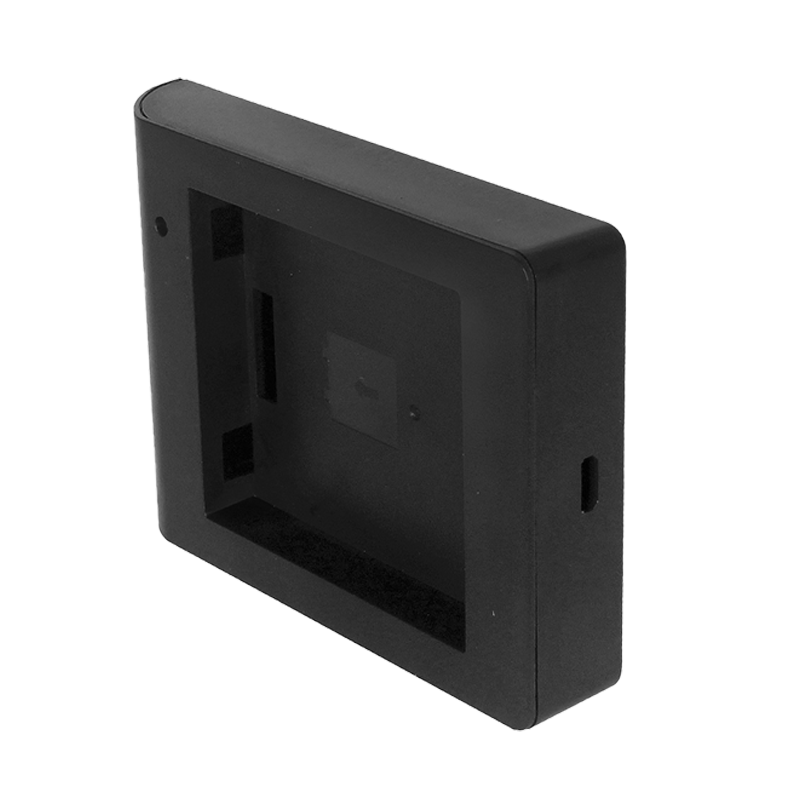
An instrument housing is a typical injection-moulded product because it has mounting bosses, display windows, cable exits, and precise internal slots. A custom injection moulding manufacturer can produce these parts in ABS, PC, or PC/ABS blends, with textured or high-gloss surfaces depending on the application. In our production range, instrument housings and related shells are a major product family because industrial automation and testing equipment depend on stable plastic enclosures.
 Custom Injection-Moulded Instrument HousingThis product matches the need for stable plastic enclosures in industrial automation and testing equipment. The manufacturer supports ABS, PC or PC/ABS blends, textured or high-gloss surfaces, and custom moulds.View Product →
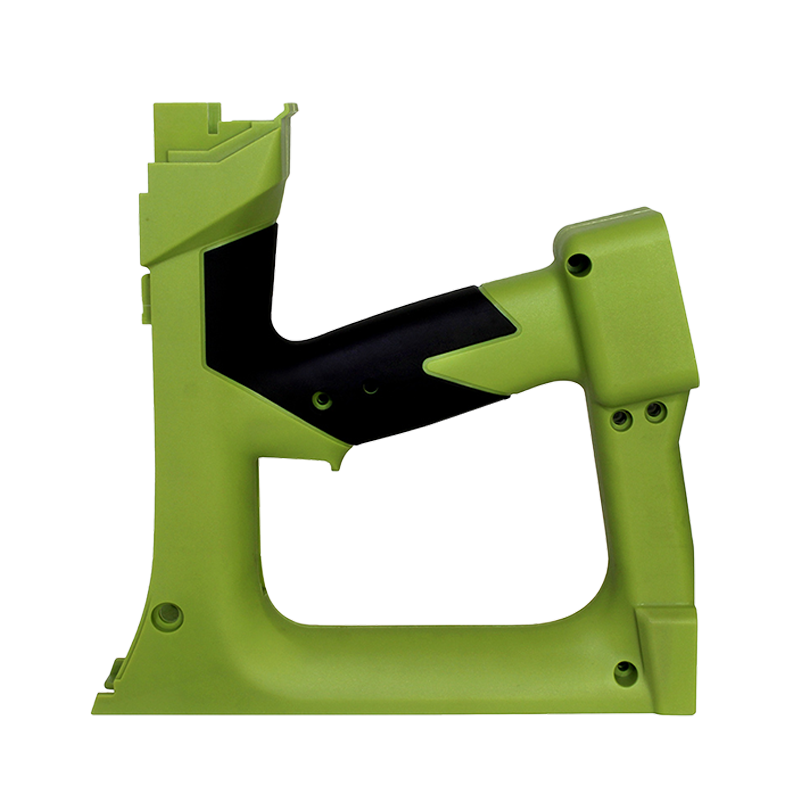
Robotic shells, including structural covers for robot arms and autonomous equipment, also demand injection moulding because of their curved surfaces and thin-wall sections. These parts often need inserts, snap-fit assembly, and precise mating edges. We have applied injection moulding to a variety of smart-hardware projects, including robot and robot-dog shells, where the difference between a well-designed mould and a poor mould shows up immediately in weld lines, sink marks, and fit tolerance.
 Injection-Moulded Robot Shell for Smart HardwareCurved surfaces and thin-wall sections make robot shells well suited to custom injection moulding. The manufacturer applies this process to robot and robot-dog shells, where careful mould design reduces weld lines, sink marks, and fit tolerance issues.View Product →
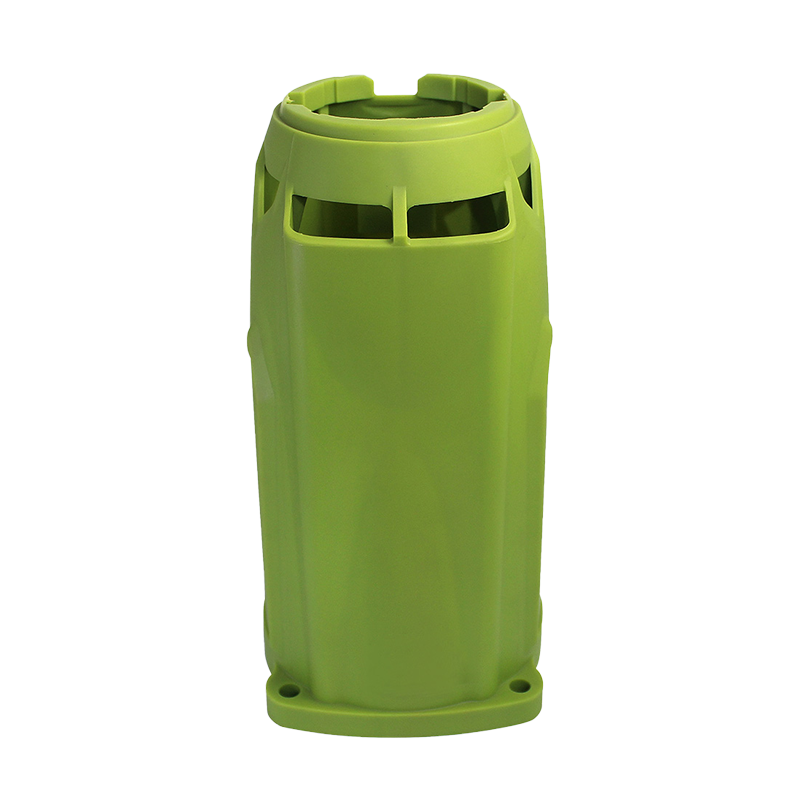
Even simple-looking home products such as a water filter pot use injection-moulded filter housings to maintain water-tight joints and flat sealing surfaces. If the housing were extruded, the internal geometry needed for the filter sealing ring could not be formed in one step. Injection moulding allows the manufacturer to integrate thread forms, guide ribs, and snap-fit covers into the same part. This is a common example of why a process comparison should be based on function, not on price per kilogram of resin.
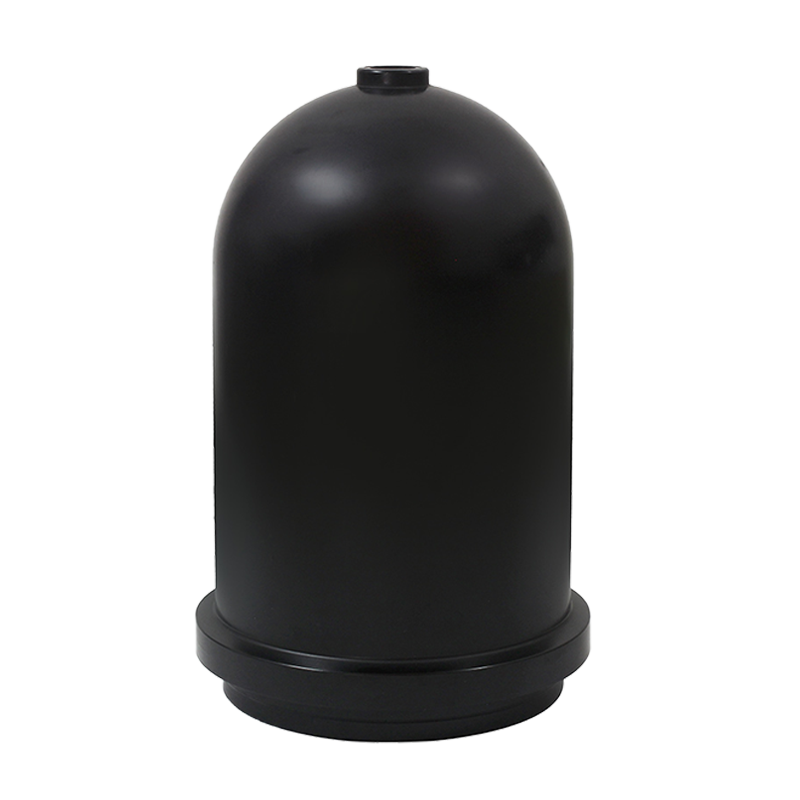 One-Stop Injection Moulded Water Filter PotThis water filter pot housing uses injection moulding to form thread forms, guide ribs, and snap-fit covers in one part. Production benefits from a one-stop service covering mould making, injection, and assembly.View Product →
For readers who want to see how injection moulding supports smart hardware, our review of plastic robot injection molding explains why thin-wall robot shells benefit from tooling that is designed for high repeatability. The same logic applies to gas detectors, power tool housings, lighting accessories, and medical device shells. The material behaves differently when it is injected into a closed mould than when it is pulled through an open die, so the design rules for injection moulding are more forgiving of bosses, ribs, and complex draft angles.
Working with a Custom Plastic Injection Moulding Manufacturer
When you outsource to a manufacturer, look for a supplier that controls both mould making and injection moulding. A factory with in-house mould design and machining can react faster when trial shots reveal draft problems, weld lines, or uneven shrinkage. Our own operation, Yuyao Hualong Moulds & Plastics Products Co., Ltd., follows this integrated model for OEM and B2B clients. Customers in instrumentation, industrial automation, automotive, lighting, and smart hardware send us 3D files or drawings, and our engineers review gate locations, ejection, material shrinkage, and mould steel selection before production begins.
This kind of early review is especially important when you are deciding between extrusion and injection moulding. A supplier that only operates extruders will naturally recommend extrusion; a supplier that only runs injection machines might not mention the profile alternative. An integrated custom injection moulding manufacturer can give you honest feedback because they are not afraid to tell you that your continuous profile would be better made on an extrusion line. For products that are genuinely injection moulded, the same supplier can then manage the entire workflow from product development to mould manufacturing, injection moulding, and final assembly. This one-stop service model reduces coordination risk and shortens the overall project timeline.
For wholesale procurement teams, the most valuable deliverable is often a mould trial report that includes dimensions, surface inspection, material certification, and suggested process adjustments. A reliable supplier will also prepare a control plan for critical dimensions and discuss how they will handle volume ramps or engineering changes. If you need a quick manufacturability review before choosing a process, contact our engineering team and include the part geometry, material preference, and expected annual quantity.
Frequently Asked Questions
Which is cheaper: extrusion moulding vs injection moulding?There is no universal answer. Extrusion has a lower die cost and lower energy cost for long profiles, which makes it cheaper for pipes, seals, and trims. Injection moulding is more economical for complex, closed parts because it removes secondary operations and delivers tight tolerances at high volumes. |
Can extrusion moulding produce hollow parts?Yes. Hollow profiles are made with a die that shapes the outer wall and a mandrel or spider that defines the inner void. Examples include pipes, tubes, and flexible hoses. The internal cavity must be continuous along the length, which is different from injection-moulded closed cavities. |
Can injection moulding produce long, continuous profiles?Not in one shot. Injection moulding produces discrete parts within the mould cavity. Very long parts can be moulded with special machines, but the practical length is limited by clamping force, platen size, and mould cost. A better comparison is between one long extruded profile and many identical moulded parts. |
Why are most product housings injection moulded instead of extruded?Housings contain closed surfaces, bosses, ribs, slots, and assembly features that an open extrusion die cannot form. Injection moulding also makes it easier to control wall thickness and produce a good appearance on all visible faces. |
Which process gives better dimensional accuracy?Injection moulding generally gives better accuracy because the closed mould cavity restrains the plastic during cooling. Extrusion tolerances depend on the profile size, material, and calibration method, and are usually looser in cross-section dimensions. |
What should a buyer ask before quoting a plastic part?Ask about the annual volume, expected part size, material grade, tolerance requirements, surface finish, and whether the part has undercuts, inserts, or pressure-retaining features. These answers determine whether extrusion rather than injection moulding will be acceptable. |
Final Recommendation: Match the Process to the Part
The cleanest way to remember the difference is to think about what the machine does to the plastic. Extrusion pushes plastic through an open die and produces a continuous shape. Injection moulding pushes plastic into a closed mould and produces a discrete part. That one difference drives every other comparison: tooling cost, cycle time, geometry freedom, tolerance, and supplier selection.
Buyers who choose injection moulding for a long, uniform profile will overpay for tooling and wonder why the part is not straight. Buyers who choose extrusion for a complex housing will spend heavily on secondary machining and still struggle to hit tolerances. Use the selection steps, tolerances, and cost tables in this article to place your part on the correct side of the extrusion moulding vs injection moulding question.
For B2B procurement, working with an established plastic injection moulding manufacturer also gives you access to design-for-manufacturing feedback. A good supplier will examine draft angles, gate placement, wall thickness, material shrinkage, and surface finish before any steel is cut. That early review is far more valuable than a cheaper mould quote. When the part is truly an injection-moulded product, the supplier can support you from prototype to mass production with a clear quality plan and reliable delivery.