English
 Español
 简体中文
At 2:17 a.m., the alarm on a 180-ton machine reads "screw recovery time exceeded," and by the time the technician reaches the press, three short shots have already dropped into the scrap bin. The screw looks fine. The check ring was replaced two weeks ago. The mold was validated in the autumn and ran clean for eleven days. What actually failed was a short, water-jacketed metal section at the rear of the barrel that most people walk past without a second look: the feed throat.
Feed throat injection molding problems are rarely dramatic at first. They show up as a slow drift in part weight, a screw recovery time that creeps from 4.2 seconds to 5.8 seconds, a faint splay mark near the gate, or a handful of rejected parts per shift that nobody can quite explain. By the time the problem becomes visible, the process window has already narrowed, and the operator starts compensating with higher injection pressure, longer hold time, or a hotter barrel, none of which address the real cause.
The conclusion this article works from is simple: the feed throat is the cheapest and most under-managed control point on an injection molding machine, and no amount of downstream tuning will compensate for a throat that is running at the wrong temperature, with the wrong water flow, or with a bore that no longer matches the screw. Get this zone right and most of the classic feeding defects either disappear or become predictable and easy to correct.
The material below is written for process engineers, mold technicians, and the buyers, product managers and sourcing staff who purchase custom molded parts and need to understand how process discipline at the rear of the barrel translates into dimensional consistency, cosmetic quality and delivery reliability in the parts they receive.
Content
- 1 What Is the Feed Throat in an Injection Molding Machine?
- 2 Why Feed Throat Temperature Controls Part Quality
- 3 How to Set Feed Throat Temperature on the Shop Floor
- 4 Troubleshooting Feed Throat Faults
- 5 How Feed Throat Faults Distribute Across Common Defects
- 6 Material-Specific Feed Throat Considerations
- 7 Feed Throat Hardware, Retrofits and Maintenance
- 8 What Feed Throat Control Means for Buyers of Custom Molded Parts
- 9 Frequently Asked Questions About Feed Throat Injection Molding
- 9.1 What temperature should a feed throat be set to?
- 9.2 Why does my feed throat keep bridging?
- 9.3 Can a feed throat be too cold?
- 9.4 What is the difference between the feed throat and the feed zone of the screw?
- 9.5 Does feed throat temperature affect part weight and dimensions?
- 9.6 How do I know if my feed throat bore is worn?
- 9.7 Should the feed throat be insulated from the barrel?
- 9.8 How does feed throat control affect the cost of custom molded parts?
What Is the Feed Throat in an Injection Molding Machine?
The feed throat is the opening and the short cylindrical passage at the rear of the barrel through which plastic pellets pass from the hopper into the first flights of the reciprocating screw. It sits between the hopper assembly above and the barrel flange ahead of it, and it is normally surrounded by a water jacket so that its internal surface can be held well below the softening point of the resin.
Its role is mechanical, thermal and pneumatic at the same time. Mechanically, it guides pellets into the screw channel at a steady rate. Thermally, it isolates the cold, solid-feed end of the process from the hot melting zones further forward. Pneumatically, it acts as the boundary between atmospheric pressure and the pressurized melt inside the barrel, which is why any loss of sealing at this point shows up as drooling, inconsistent shot size or vacuum-loader faults.
Anatomy of a Feed Throat Assembly
A typical assembly on a mid-tonnage machine includes several parts that each contribute to feeding stability:
- The hopper or dryer outlet, which delivers dried or undried pellets by gravity.
- A slide gate or shut-off plate used when changing material or pulling the screw.
- A magnet grid or metal trap that catches tramp metal before it reaches the screw.
- The feed throat body itself, usually a cast or machined steel or bronze component.
- A water jacket or cooling coil that surrounds the bore.
- The feed throat bore, sized to match the screw diameter and the pellet form.
- An insulation plate or spacer between the throat and the barrel flange.
- Temperature and flow connections from a chiller or temperature control unit.
Why Process Engineers Call It "Zone Zero"
Machine controllers label barrel zones from the nozzle backwards, and the feed throat often sits outside that numbering entirely. In practice, many experienced setters treat it as zone zero, the zone that determines the quality of everything the other zones receive. If zone zero is out of specification, zone one is receiving pellets that are already sticky, already partially fused, or already contaminated with condensation.
The feed throat also determines the solids conveying efficiency of the screw. The first few flights of the screw are designed to convey solid pellets, not melt. When the pellets arrive at that section in the condition the screw was designed for, the result is a stable, well-compacted solid bed that melts predictably. When they arrive tacky and agglomerated, the solid bed breaks up, conveying becomes erratic, and the melt quality at the nozzle varies from shot to shot.
Why Feed Throat Temperature Controls Part Quality
The single most common mistake in feed throat management is to assume that cooler is always safer. In reality there is a window, and it behaves differently for different polymers, different pellet geometries and different machine configurations. Walking outside that window in either direction creates its own family of defects.
Bridging: How a Warm Throat Stops Production
Bridging occurs when pellets in the feed throat become soft and tacky enough to stick to each other and to the throat wall, forming an arch or bridge over the screw. Once the bridge forms, pellets stop falling into the screw. The screw starves, screw recovery time climbs, shot size falls, and parts come out short or underfilled. In severe cases the screw continues to rotate against a diminishing supply of material, generating heat and friction, while the machine controller tries to compensate with longer recovery times.
Bridging also carries a genuine safety risk. When a bridge finally collapses, a surge of material drops into the screw, and pressure can build rapidly enough to eject material, and sometimes the hopper itself, upward. This is one reason feed throat temperature is treated as a safety-relevant setting rather than a cosmetic one.
Screw Recovery, Melt Uniformity and Cycle Time
Screw recovery time is one of the most sensitive indicators of feeding stability available on any machine, and it costs nothing to monitor. When the throat is running slightly warm, recovery time often becomes longer and more variable before any visible defect appears. A recovery time that varies by more than a few tenths of a second across twenty cycles is a reliable early warning that the solids conveying section is not receiving a consistent feed.
Melt uniformity follows directly. A screw that receives an uneven solid bed produces a melt with uneven temperature and uneven viscosity, even if the barrel zones are held perfectly. That variation shows up in the mold as inconsistent cavity fill balance, fluctuating part weight, and dimensional drift on tight-tolerance features. For parts with cosmetic requirements, the same variation appears as flow lines, splay, or gloss differences between cavities.
What Happens When the Throat Runs Too Cold
Running the feed throat excessively cold is not a safe default. A throat held far below the dew point of the surrounding air will attract condensation on its internal surfaces, particularly in humid climates and during the rainy season. That moisture transfers into the pellets and produces silver streaks, splay and surface blemishes that are often misdiagnosed as incomplete drying. A very cold throat can also cause the first flights of the screw to run with excessive torque, increasing wear on the drive train and, on some materials, producing pellets that fracture instead of compacting.
How to Set Feed Throat Temperature on the Shop Floor
There is no universal number, but there is a reliable method. The method starts with the resin supplier's drying recommendation, subtracts a margin, and then verifies the result against actual screw recovery behavior and part quality.
- Look up the recommended drying temperature and drying time for the specific grade, not just the polymer family.
- Set the feed throat cooling water to roughly 20 to 30 degrees Fahrenheit below the drying temperature as a starting point.
- Confirm the actual throat surface temperature with a contact pyrometer rather than trusting the chiller display.
- Run twenty consecutive cycles and record screw recovery time, shot cushion and part weight.
- If recovery time is stable and cushion is repeatable, leave the setting alone and record it in the setup sheet.
- If recovery time drifts or bridging appears, lower the throat temperature in small steps and re-test.
- If splay or silver streaks appear despite correct drying, raise the throat temperature slightly to eliminate condensation.
- Verify water flow rate, not only water temperature. A properly chilled loop with restricted flow will not cool the throat evenly.
- Document the final set point by material and by machine, because the same resin can need different settings on different screw designs.
Typical Starting Points by Material Family
The table below gives general starting points that experienced setters use as a first trial. They are not specifications, and they should always be checked against the resin supplier's processing guide, because grade-specific additives, fillers and moisture sensitivity can shift the window considerably.
| Resin family | Typical drying temperature | Feed throat water starting point | Main risk if set incorrectly |
|---|---|---|---|
| ABS | 80 to 90 C | 15 to 27 C | Bridging and splay marks |
| Polycarbonate | 115 to 125 C | 15 to 27 C | Agglomeration, silver streaks |
| Polyamide (PA6, PA66) | 80 to 100 C | 25 to 40 C | Condensation, wet pellets |
| Polypropylene | Often no drying | 15 to 25 C | Bridging in warm plants |
| POM | 80 to 100 C | 15 to 25 C | Very fast bridging, degradation |
| PET | 120 to 160 C | 25 to 40 C | Hydrolysis, low viscosity |
| TPU and TPE | 60 to 80 C | 15 to 25 C | Blocking, tacky pellets |
| Glass-filled grades | Per base resin | Per base resin | Throat bore wear, uneven feed |
Water Flow and Hardware Checks That Are Easy to Skip
Temperature without flow is a false reading. A throat jacket with a partially blocked passage will show correct supply temperature at the chiller while the actual throat surface runs far warmer. Check the return flow by feel, by flow meter if one is installed, or by measuring the temperature drop across the jacket. A large drop indicates good heat transfer; almost no drop usually means almost no flow.
Also check the insulation plate between the throat and the barrel flange. If that plate has degraded, heat conducts backward from the barrel into the throat, and no amount of chilled water will hold the set point. This is one of the most common causes of a feed throat problem that appears suddenly on a machine that has run well for years.
Troubleshooting Feed Throat Faults
Feed throat faults usually present as one of a small number of recognizable symptoms. Matching the symptom to the likely cause shortens downtime considerably, because the corrective action is often a ten-minute adjustment rather than a screw pull.
| Symptom | Probable cause | Corrective action |
|---|---|---|
| Screw recovery time rising steadily | Throat running warm, partial bridging | Lower throat water set point, verify flow, inspect for fines |
| Short shots appearing late in a run | Starved screw, interrupted feed | Clear the bridge, check hopper level, check slide gate position |
| Silver streaks despite correct drying | Condensation on an over-cooled throat | Raise throat temperature, check ambient humidity and dew point |
| Material surging into the screw | Bridge collapse releasing stored pellets | Stabilize throat temperature, reduce hopper vibration |
| Recovery time highly variable | Regrind with high fines content | Screen regrind, reduce fines, blend regrind more evenly |
| Bridging only after short stops | Heat soak-back from the barrel during idle | Purge or run the screw down before stopping, insulate the throat |
| Feed rate drops as ambient rises | Inadequate heat removal in summer conditions | Increase flow, lower supply temperature, inspect jacket fouling |
| Metal contamination reaching the screw | Missing or bypassed magnet grid | Reinstall and clean the magnet at every material change |
One pattern worth highlighting is bridging that only appears after the machine has been idle for ten or twenty minutes. In that situation, the throat itself may be correctly cooled, but heat stored in the barrel conducts backward through the flange while the screw is stationary. When production resumes, the first pellets to arrive encounter a warm throat and stick. Running the screw down before a short stop, or purging, usually removes the problem without touching the water set point.
Another pattern is a machine that behaves well with virgin material and badly with regrind. Fines and dust have a much larger surface area than pellets, and they absorb heat and moisture faster. They also compact differently in the throat bore. Screening the regrind stream and controlling the ratio is often more effective than any temperature adjustment.
How Feed Throat Faults Distribute Across Common Defects
Process engineers often describe feed throat issues as a single problem, but they actually appear as a spread of different defects across the plant. Some show up immediately as machine alarms, while others appear quietly in the quality lab days later. Ranking them helps a team decide where to spend troubleshooting time first. The ranking below reflects the relative frequency with which these fault patterns are reported in day-to-day molding operations. It is intended as a practical checklist rather than a statistical measurement. The pattern is surprisingly consistent across machines, materials and plant sizes.
The first observation from this ranking is that bridging dominates the list by a wide margin, and bridging is fundamentally a temperature and heat-transfer problem. That means the largest single share of feed throat downtime can be addressed with cooling water discipline, insulation checks and flow verification, all of which are low-cost interventions. A plant that solves bridging usually removes roughly a third of its feed-related stoppages without purchasing anything.
The second observation is that unstable screw recovery time ranks second, ahead of any visible part defect. This is important because recovery time variation is measurable in real time on the machine controller, while part defects are only detected downstream. Teams that trend recovery time catch feeding problems hours or days before the quality lab does, and they catch them on the machine rather than in a finished goods shipment.
The third observation is that short shots rank third, which fits the physical sequence of events. When the screw starves, the first consequence is a shorter effective shot, and only later does the cavity fail to fill completely. That sequence explains why operators often see recovery time drift first, then cushion variation, and finally short shots. Reading the sequence rather than reacting to the final symptom is what separates reactive and proactive process control.
The fourth point concerns splay and silver streaks, which account for a meaningful share of throat-related defects. These are frequently blamed entirely on the dryer, and in many cases the dryer is indeed at fault. However, an over-cooled throat in a humid plant introduces condensation directly into the material stream, and no dryer setting can compensate for moisture added after drying. Checking ambient dew point alongside throat temperature is a simple habit that resolves a lot of misdiagnosed splay.
The fifth point is that black specks and start-up degradation sit lower in the ranking but carry a disproportionate cost when they occur, because they typically require purging, screw cleaning and possibly a production stop. These events are often triggered by material sitting too long in a warm throat during a stoppage, then degrading before it reaches the screw. Preventing them is mostly a matter of idle-time discipline rather than capital investment.
Finally, throat freeze-off and starved feeding appear least frequently, and this is consistent with the fact that most plants err on the side of a cold throat rather than a warm one. The rarity of freeze-off should not be read as reassurance. When it does happen, it is usually accompanied by high drive torque and mechanical stress on the screw and gearbox, which makes it a low-frequency but high-severity event.
Taken together, the distribution points to a clear priority order for maintenance and process teams. Start with bridging control, then build a recovery time monitoring habit, then review the drying and throat interface for condensation risk, and finally address idle-time and regrind handling. A team that works through those four items in sequence will have covered the large majority of feed throat related losses on a typical molding floor.
Material-Specific Feed Throat Considerations
Different polymers behave differently in the feed throat because of differences in softening behavior, moisture sensitivity, pellet hardness and additive content. A setting that works perfectly for polypropylene can be actively harmful for POM, which softens quickly and degrades readily when held warm.
Amorphous resins such as ABS and polycarbonate generally tolerate a wide throat window, but they soften gradually and can become tacky over a broad temperature band, which makes them prone to slow bridging rather than sudden blockages. Semi-crystalline resins such as polypropylene and polyethylene tend to feed more predictably, but they are also more sensitive to fines and to hopper-level fluctuations. Hygroscopic engineering resins such as polyamide and PET need throat temperatures warm enough to avoid condensation on the throat wall, which is why their recommended values are often higher than intuition suggests.
Highly filled and glass-reinforced grades introduce a separate consideration: abrasive pellets wear the throat bore over time. As the bore enlarges or becomes polished unevenly, the feed pattern changes, and the machine that once ran clean starts showing intermittent recovery fluctuation. Measuring the throat bore at annual maintenance intervals is a simple practice that catches this before it becomes a quality problem.
Where This Shows Up in Finished Parts
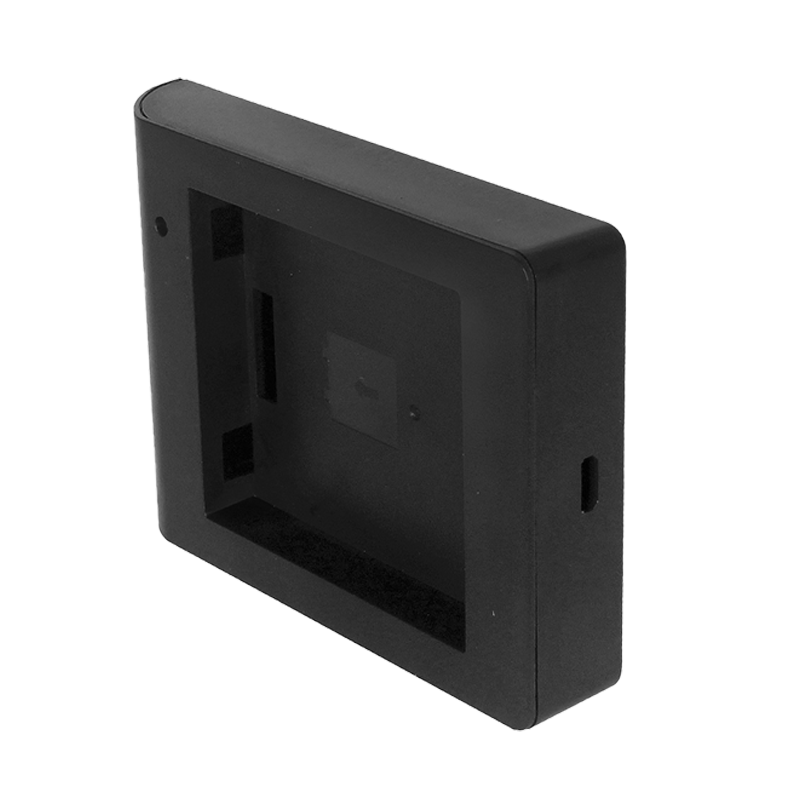
Feed throat stability matters most in parts with tight cosmetic or dimensional requirements, because those are the parts where small variations in melt uniformity become visible or measurable. Instrument housings with thin walls, tight flatness requirements and visible surfaces are a good example, since flow line variation and gloss differences between cavities are immediately noticed by the end customer.
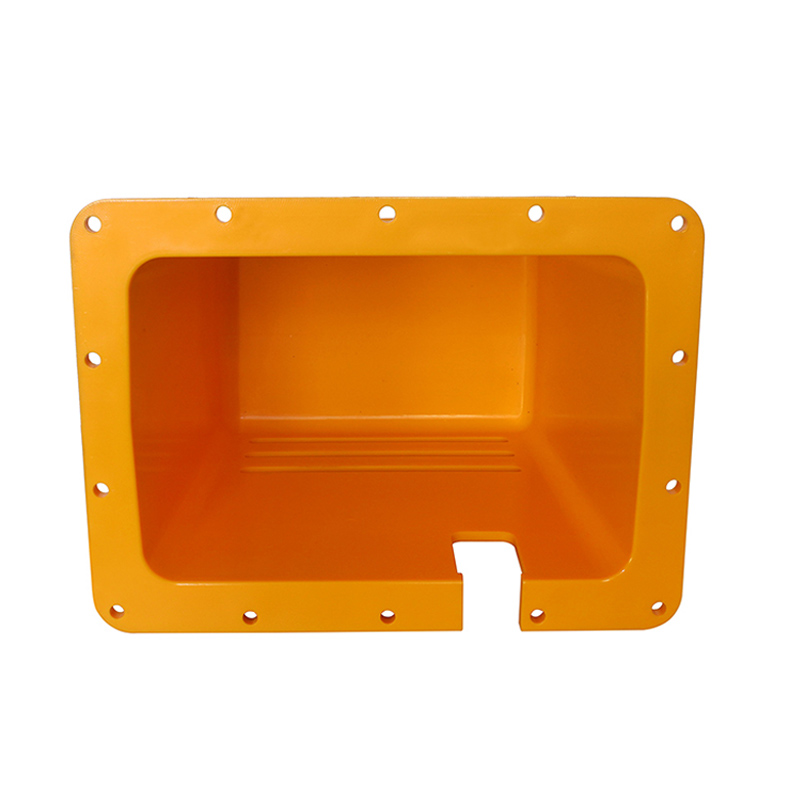 Instrument HousingHow long can I get the feedbacks after we sent the inquiry? We will reply you within 12 hours in working day.View Product →
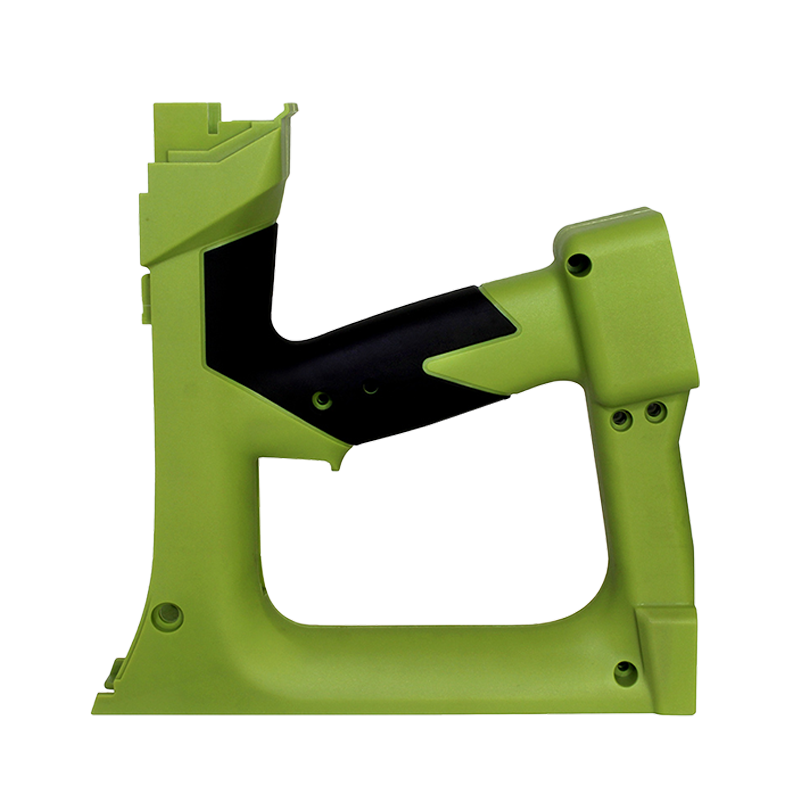
Structural parts with high glass content follow the same logic but with a different failure mode. Power tool housings and similar load-bearing components depend on consistent melt temperature and consistent fiber distribution, and a starved or surging screw produces weld lines and weak spots that may pass visual inspection and fail in the field.
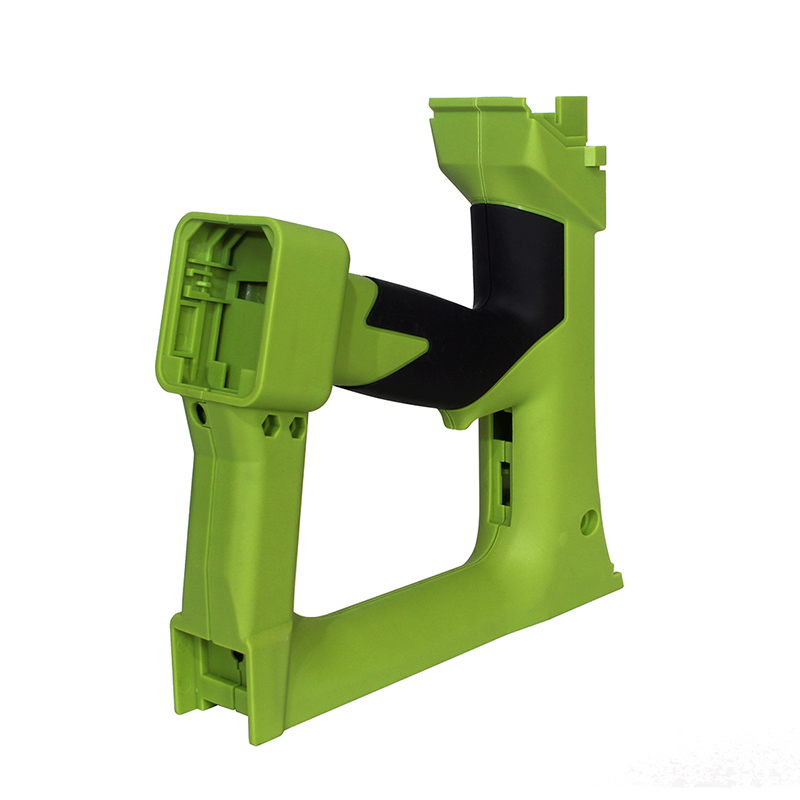 Power Tool Housing AHow long can I get the feedbacks after we sent the inquiry? We will reply you within 12 hours in working day.View Product →
Safety-related products raise the stakes further. Gas detector and sensor housings must seal correctly, and inconsistent melt flow can leave sink marks around seal grooves or partial fills at thin ribs, both of which compromise the sealing function even when the part looks acceptable at a glance.
Feed Throat Hardware, Retrofits and Maintenance
Hardware condition determines whether the temperature setting you choose actually reaches the pellets. A worn or fouled throat will not hold its set point no matter how precisely the chiller is programmed, and this is one of the most frequently overlooked maintenance items on an injection molding machine.
- Inspect the water jacket for scale and fouling at least twice a year; hard water deposits are a common cause of reduced cooling.
- Replace degraded insulation plates between the throat and the barrel flange before they allow heat soak-back.
- Measure the throat bore annually and compare it to the original dimension, especially on machines running glass-filled material.
- Clean and inspect the magnet grid at every material change rather than relying on visual inspection from a distance.
- Check the slide gate for wear; a partially closed gate creates a restriction that looks like a temperature problem.
- Verify that the hopper outlet is not choked by oversized regrind or by pellet clumping in the dryer outlet.
- Confirm that the vacuum loader discharges fully and does not leave a heel of material sitting warm in the throat.
- Review the routing of cooling lines so that the throat loop is not sharing a manifold with a hot mold circuit.
On older machines that lack a dedicated throat cooling circuit, a simple retrofit is often worthwhile: a small independent chiller loop with its own flow meter and a thermocouple mounted on the throat body. The cost is modest compared with the downtime caused by repeated bridging events, and it converts an invisible variable into a logged one.
For plants running multiple materials on the same press, a second practical step is to record the correct throat set point on the setup sheet for each material and each machine, rather than relying on institutional memory. Material changes are one of the most common moments when an otherwise stable process is quietly pushed out of its window.
What Feed Throat Control Means for Buyers of Custom Molded Parts
If you purchase custom plastic components rather than molding them yourself, feed throat discipline may seem like an internal manufacturing detail. It is not. It is one of the clearest signals of whether a supplier controls its process or simply reacts to defects after they appear, and it translates directly into the consistency of the parts you receive.
A supplier with good throat control can explain its set points by material, show recovery time data from production runs, and describe how it handles idle periods and material changes. A supplier without that discipline will typically describe quality in terms of final inspection, which means problems are being found after value has already been added.
When evaluating a custom injection molding manufacturer, a supplier or a wholesaler of molded components, a small number of targeted questions reveals a great deal about process maturity:
- How is feed throat temperature controlled and recorded for each material you run?
- Is screw recovery time monitored as a routine process parameter?
- What is your procedure for short machine stoppages that could cause heat soak-back?
- How is regrind screened and blended, and what fines limits do you apply?
- When was the last time throat bores and insulation plates were inspected on your presses?
- How do you document process settings so they are repeatable across shifts and machines?
These questions matter most for programs with tight dimensional tolerances, cosmetic surfaces, sealing functions or safety-related performance. In those programs, part-to-part variation is usually driven by melt uniformity, and melt uniformity begins with a stable solid feed at the rear of the barrel.
Further reading from our plant and industry notes:
How a one-stop service model runs from product development through molding and assembly
Talk to our engineering team about your custom molded part requirements
Frequently Asked Questions About Feed Throat Injection Molding
What temperature should a feed throat be set to?
There is no single value. A practical starting point for most engineering resins is roughly 20 to 30 degrees Fahrenheit below the recommended drying temperature for that specific grade, which typically places the throat cooling water between about 60 and 90 degrees Fahrenheit. Some materials and machine configurations run warmer, up to around 130 degrees Fahrenheit, and hygroscopic resins often need a warmer throat to avoid condensation. Always confirm with the resin supplier's processing guide and verify the actual throat surface temperature with a pyrometer.
Why does my feed throat keep bridging?
Bridging almost always means the throat is too warm relative to the resin's softening behavior, or that heat is reaching the throat from another source. The common causes are insufficient cooling water flow, a fouled water jacket, a degraded insulation plate between the throat and the barrel flange, heat soak-back during short stops, and a high proportion of fines in the regrind. Work through those five items in order before changing any other process parameter.
Can a feed throat be too cold?
Yes, and the consequence is often misdiagnosed. An excessively cold throat attracts condensation in humid conditions, which adds moisture to material that was correctly dried and shows up as splay, silver streaks or surface blemishes. In extreme cases a very cold throat increases drive torque on the first flights of the screw and accelerates wear. Cooler is not automatically safer.
What is the difference between the feed throat and the feed zone of the screw?
The feed throat is the stationary passage and cooling jacket at the rear of the barrel through which pellets pass. The feed zone is the first section of the screw itself, where pellets are conveyed and compacted into a solid bed. The throat determines the condition of the pellets when they arrive; the feed zone determines how well they are conveyed forward. Both matter, but throat problems usually appear first.
Does feed throat temperature affect part weight and dimensions?
It affects them indirectly but significantly. A stable throat produces a stable solid bed, which produces a stable melt, which produces repeatable shot cushion and consistent cavity pressure. When the throat drifts, shot cushion varies, and that variation appears as part weight scatter, dimensional drift on tight tolerances, and inconsistent fill balance between cavities.
How do I know if my feed throat bore is worn?
Measure it at planned maintenance intervals and compare it with the original drawing, particularly on machines running glass-filled or mineral-filled materials. Symptoms of a worn bore include a gradual change in feeding behavior, increased recovery time variation, and occasional uneven feed that cannot be corrected by temperature adjustment alone.
Should the feed throat be insulated from the barrel?
Yes. An insulation plate or spacer between the throat and the barrel flange reduces heat conduction from the hot barrel into the cooled throat. When that insulation degrades, machines that have run reliably for years suddenly begin bridging, and no amount of chilled water resolves it until the plate is replaced.
How does feed throat control affect the cost of custom molded parts?
It affects cost through scrap rate, cycle time consistency and downtime. A plant that controls its throat well runs fewer short shots, fewer cosmetic rejections and fewer unplanned stoppages, and those savings are reflected in a stable quoted price. A plant that fights bridging every shift is absorbing those losses somewhere, usually in the price or in the delivery schedule.
Feed throat injection molding is one of those subjects that seems narrow until you connect it to everything else. The temperature of a small water-jacketed component at the rear of the barrel determines whether pellets enter the screw as free-flowing solids or as a sticky, agglomerated mass. That determines whether the screw fills consistently, which determines whether the melt is uniform, which determines whether parts hold their dimensions and their appearance shift after shift.
The practical sequence for any plant or any supplier review is the same. Verify the set point against the resin supplier's recommendation. Verify that the cooling water actually flows through the jacket. Verify that the insulation plate and the throat bore are in good condition. Monitor screw recovery time as a routine parameter rather than as a troubleshooting tool. Handle idle periods and regrind with the same discipline you apply to barrel temperatures.
Do those five things and the rear of the machine stops being a source of surprise alarms at 2:17 a.m. and becomes what it should be: a controlled, documented, repeatable part of the process, and a reliable foundation for the parts your customers actually receive.