English
 Español
 简体中文
An instrument housing that spends eight hours a day inside a 140 °C drying oven will not survive on a standard ABS tool. Neither will a connector body that has to hold its dimensions through a lead-free reflow profile, or a lamp holder that sits a few millimetres away from a 30 W LED array. Teams usually find this out the expensive way: the first prototype looks fine on the bench, then distorts in the field, and by then the tool has already been cut.
The working conclusion is simple. High temperature injection molding is not a single machine setting that someone dials in at the press. It is a thermal budget that has to be agreed across five things at the same time: the resin family, the drying and melt profile, the hot runner and nozzle assembly, the tool steel and its heat treatment, and the mold temperature control loop. Get four of them right and the fifth still shows up as silver streaks, short shots, flash, warpage, or a slow dimensional drift that only becomes visible after a few thousand shots.
This guide is written for design engineers, product managers and sourcing people who are specifying parts in high temperature engineering plastics, or moving an existing part out of a low-temperature resin and into a hotter environment. It covers the resin families and their realistic working windows, what has to change on the machine and inside the tool, the defects that point to a specific imbalance, design rules that extend tool life, and the questions worth asking a custom injection molding manufacturer before a tool is released for cutting.
Content
- 1 What Counts as High Temperature Injection Molding
- 2 High Temperature Resins and Their Real Working Windows
- 3 How High Temperature Injection Molding Changes the Machine and the Tool
- 4 Melt Temperature Ranges at a Glance
- 5 Process Window Control and the Defects That Signal Trouble
- 6 Part and Mold Design Rules for High Temperature Injection Molding
- 7 Where High Temperature Molded Parts Are Used
- 7.1 Automotive Under-Hood and Powertrain Components
- 7.2 Electrical, Connector and Power Distribution Parts
- 7.3 Industrial Instruments, Sensors and Monitoring Housings
- 7.4 Lighting and High Power LED Components
- 7.5 Medical, Sterilisation and Food Contact Parts
- 7.6 Industrial Automation, Robotics and IoT Enclosures
- 8 Quality Control, Testing and the Documentation Buyers Should Ask For
- 9 Choosing a High Temperature Injection Molding Manufacturer
- 10 Cost Drivers in High Temperature Injection Molding
- 11 FAQ About High Temperature Injection Molding
- 11.1 What temperature counts as high temperature injection molding?
- 11.2 Can I run a high temperature resin on a standard injection molding machine?
- 11.3 Why does my high temperature part keep warping even though the dimensions are correct on the bench?
- 11.4 How much longer is the cycle time compared with a standard resin?
- 11.5 Is PEEK always the right choice for a high temperature application?
- 11.6 How do I know whether my supplier can actually run the process?
- 11.7 Does part design have to change when moving from a standard resin to a high temperature grade?
- 11.8 What should be included in a first article inspection for a high temperature part?
What Counts as High Temperature Injection Molding
In practice, the industry applies the label once the melt temperature passes roughly 300 °C and the mold surface has to be held above about 100 °C. That threshold is not a formal standard, but it is a useful line, because it sits close to the point where ordinary commodity equipment starts to become the limiting factor rather than the material.
For reference, a polypropylene or polyethylene job typically runs a melt temperature between 200 °C and 230 °C with a mold at 20 °C to 40 °C. ABS sits around 230 °C to 260 °C with a mold at 50 °C to 70 °C. General purpose polycarbonate reaches 280 °C to 300 °C, and most shops already treat that as the edge of their comfort zone. High temperature molding starts where those numbers stop, and the equipment list changes accordingly.
Three things shift once you cross that line.
- The process window narrows in both directions. The gap between "too cold to fill" and "hot enough to degrade" can be as little as 20 °C for some semi-crystalline resins. On a polypropylene job, a 15 °C barrel fluctuation is background noise. On a PPS job it can be the difference between a full shot and a scorched one.
- Heat transfer becomes the dominant physics. At high mold temperatures, the cooling phase stops being a simple quench. The part stays soft for longer, packing pressure has more influence on final dimensions, and the difference between a balanced and an unbalanced cooling circuit turns into a measurable warp.
- Every component in the chain has a temperature ceiling. Standard tool steel is usually supplied in a pre-hardened condition that is fine at 80 °C but questionable at 180 °C. Standard hydraulic hoses, seals, ejector lubricants and even some temperature sensor adhesives have their own limits that have nothing to do with the resin.
The practical consequence is that high temperature injection molding projects need a longer engineering conversation up front. Material selection, tool steel selection and the mold temperature control strategy are decisions that reference each other, and changing one after the tool is cut is expensive. This is one reason why buyers often prefer to work with a supplier that handles mold design and molding in the same building, rather than splitting the tool and the press between two vendors who never sit in the same room.
High Temperature Resins and Their Real Working Windows
Material choice drives everything else down the line, including the tool steel, the hot runner, the ejection system and the drying routine. The table below summarises the resins that appear most often in high temperature injection molding work, along with the processing ranges that shops actually run in production rather than the optimistic numbers on a data sheet.
Amorphous and Semi-Crystalline Behaviour
Semi-crystalline resins such as PPS, PA46, PPA and PEEK need a hot mold to develop crystallinity. If the mold surface is too cold, the skin solidifies before the chains organise, and the part comes out with reduced chemical resistance, lower stiffness at temperature and unpredictable post-molding shrinkage. Amorphous resins such as PEI and PES behave differently: a hot mold mainly improves surface finish and reduces internal stress, and the dimensional payoff is smaller.
That single distinction explains why two parts made from resins with similar melt temperatures can need completely different mold temperature controllers, cycle times and ejection strategies.
Filler and Fibre Effects
Adding 30 percent glass fibre typically raises stiffness, lowers the coefficient of thermal expansion and improves dimensional stability at temperature, but it also raises melt viscosity and abrasion. A glass-filled high temperature resin will wear a soft gate insert quickly, and it will amplify any weld line weakness. Carbon fibre and mineral fillers each bring their own trade-offs. When a part has to hold tight tolerances at 150 °C, the filler package usually matters as much as the base polymer.
| Resin | Typical melt temperature | Recommended mold temperature | Continuous service range | Main processing caution |
|---|---|---|---|---|
| PA66-GF30 | 280-300 °C | 80-100 °C | up to about 120 °C | Moisture sensitive, needs thorough drying |
| PPA (PA6T/66) | 315-340 °C | 120-150 °C | up to about 150 °C | Hot runner strongly preferred over cold runner |
| PA46 | 320-340 °C | 120-140 °C | 150-170 °C | Very fast crystallisation, short cycle window |
| PPS | 320-350 °C | 130-150 °C | 200-220 °C | Needs high mold temperature for full crystallinity |
| LCP | 330-360 °C | 80-120 °C | 200 °C and above | Extremely low viscosity, high flash risk |
| PEI | 350-380 °C | 120-160 °C | up to about 170 °C | High melt viscosity, generous gate sizing needed |
| PEEK | 370-400 °C | 170-200 °C | 250 °C and above | Very high cost, tool steel and heaters must match |
Two rows in that table are worth pausing on. PEEK is often specified because someone read that it survives 250 °C continuously, but at roughly twenty to forty times the cost of a glass-filled PA66, it should only be used when the thermal requirement genuinely cannot be met any other way. PPS, on the other hand, is frequently overlooked: it delivers strong thermal and chemical resistance at a much more workable price point, provided the mold can actually be held at 140 °C.
How High Temperature Injection Molding Changes the Machine and the Tool
Once the resin is fixed, the engineering question becomes what has to be different on the press and in the mold. The answer is almost everything that touches heat.
Barrel, Screw and Hot Runner
A standard general-purpose screw with a compression ratio around 2:1 is workable for many high temperature resins, but abrasive glass-filled grades benefit from a bimetallic barrel and a wear-resistant screw tip and check ring. Nozzle selection matters more than most people expect: a general-purpose nozzle with a small orifice creates high shear, and high shear at 350 °C is a reliable way to produce black specks and degraded material that only appears after a few hours of running.
The hot runner decision is usually driven by shot size and colour control. For small, tight-tolerance parts in PPS or PPA, an internally heated hot runner with individual tip control holds the melt consistently and eliminates cold slug waste. The trade-offs are cost, lead time, and the fact that a hot runner system must be rated for the resin's melt temperature, not the shop's usual ceiling. A manifold designed for 300 °C should not be pushed to 380 °C for a PEEK trial without a written confirmation from the supplier.
Mold Temperature Controllers
Water at 90 °C is not enough for a PPS or PEEK tool. High temperature molding normally requires either pressurised water systems that reach 140 °C to 160 °C, or oil-based units that reach 200 °C and beyond. Pressurised water transfers heat more efficiently and keeps hoses and fittings simpler; oil reaches higher temperatures but demands more maintenance and careful leak management.
The controller is not a peripheral item. If the mold surface swings by 15 °C between shots, semi-crystalline parts will vary in shrinkage, and a dimension that was comfortably inside tolerance during the trial can drift out during the first production week. For parts with tight tolerances, it is worth specifying separate control zones for the cavity and the core rather than a single loop.
Tool Steel, Gating and Venting
A tool running at 160 °C to 200 °C continuously needs steel that holds its hardness at that temperature. Pre-hardened steels in the 30 to 34 HRC range are common for general molding, but for high temperature work with abrasive resins, through-hardened or precipitation-hardened grades in the 48 to 52 HRC range give a better balance of wear resistance and thermal stability. Copper alloys are sometimes used for cores that need extra heat extraction, though they wear faster in glass-filled applications.
Gating deserves attention because high temperature resins are often sensitive to shear. A large, short gate with a generous land reduces shear heating and improves packing. Venting is equally important: these resins generate volatiles, and trapped gas produces burn marks and short shots. Vent depths that work for polypropylene will be too shallow for many high temperature grades, and vents need cleaning on a defined schedule rather than when a defect appears.
Melt Temperature Ranges at a Glance
The chart below places the main high temperature resin families on a common scale so the spread becomes visible at a glance. The bars are drawn from a 250 °C baseline up to each resin's upper melt temperature, which is the number that usually decides whether an existing barrel, manifold and heater set can handle the job.
The first thing the chart shows is that the gap between a glass-filled PA66 and a PEEK is roughly 100 °C at the top of the range, which is far more than a matter of adjusting a barrel setting. It means different heater bands, different thermocouples, a different screw, a different hot runner rating and a different mold temperature control unit. Any quotation that treats these as the same job is likely to underestimate the tooling and the trial time.
The second observation is that a cluster of resins sits in a relatively narrow band between 315 °C and 360 °C. PPS, PA46, PPA and LCP all live in that neighbourhood, and for a large share of industrial applications the choice between them comes down to cost, chemical resistance and dimensional behaviour rather than thermal ceiling. That is good news for buyers, because it means a single well-equipped production cell can cover several projects without a complete change of hardware.
The third point is that the chart says nothing about mold temperature, and mold temperature is often the harder constraint to satisfy. PPS and PEEK both need a hot tool, while LCP runs happily in a much cooler mold despite its high melt temperature. Reading the two numbers together, rather than the melt temperature alone, is what separates a realistic process plan from a data sheet exercise.
Process Window Control and the Defects That Signal Trouble
Defects in high temperature injection molding are rarely random. Each one usually points at a specific part of the thermal chain that is out of balance, and reading them correctly saves trial time.
| Defect | Typical symptom | Likely cause | Corrective action |
|---|---|---|---|
| Thermal degradation | Silver streaks, dark specks, acrid smell | Melt overheated, long residence time, high shear nozzle | Lower barrel profile, reduce screw speed, enlarge gate and nozzle orifice |
| Short shot | Incomplete fill at the far end or thin ribs | Melt too cold, injection speed too low, poor venting | Raise melt temperature in steps, increase injection velocity, deepen vents |
| Flash | Thin fins along parting line or ejector pins | Mold surface too hot, low clamp force relative to cavity pressure | Reduce mold temperature, verify clamp tonnage, check plate deflection |
| Warpage | Twist or bow after ejection | Unbalanced cooling, uneven packing, wrong gate location | Balance cooling circuits, extend packing, relocate gate |
| Dimensional drift | Dimensions move over hours of running | Mold temperature cycling, inconsistent crystallinity | Add controller zones, stabilise cycle time, verify heater capacity |
| Brittle weld lines | Cracking along a flow junction | Low mold temperature at the weld, poor venting | Raise local mold temperature, add overflow, adjust gate position |
Two of these deserve extra comment because they are frequently misdiagnosed. Thermal degradation is often blamed on the resin when the real cause is residence time: a small shot in a large barrel can leave material sitting at 350 °C for several minutes, and no amount of drying will fix that. The remedy is often a smaller barrel or a hot runner with a properly sized shot capacity, not a material change.
Dimensional drift is the other one. When a part measures correctly at the start of a shift and drifts out of tolerance by mid-afternoon, the cause is almost always thermal rather than mechanical. Mold temperature controllers lose capacity as they age, heater bands fail gradually rather than suddenly, and a cooling circuit that was balanced on a new tool can become restricted over months of production. Recording mold surface temperature alongside dimensional data turns this from a mystery into a maintenance item.
Drying and Residence Time Discipline
Most high temperature engineering resins are hygroscopic, and moisture at 350 °C causes hydrolysis that shows up as reduced mechanical properties rather than obvious surface defects. Drying specifications should be written into the process sheet with the same seriousness as the melt profile, and hopper dryers should be verified with a dew point reading rather than a timer. In one common pattern, a molder drys correctly during the trial and then shortens the drying cycle under production pressure; the parts still look acceptable, but impact strength quietly drops.
Part and Mold Design Rules for High Temperature Injection Molding
Design decisions taken at the CAD stage determine how forgiving the tool will be at 160 °C. The following rules are the ones that come up repeatedly when a part is moved into a high temperature resin.
- Keep wall thickness uniform and generous. Thin walls in high temperature resins fill poorly and cool quickly, which promotes short shots. Where a thin section is unavoidable, taper the transition rather than stepping it abruptly.
- Allow for higher and more anisotropic shrinkage. Glass-filled semi-crystalline resins can shrink noticeably more in the flow direction than across it. A part that was dimensionally simple in ABS may need two shrinkage values applied in the mold design.
- Design draft angles with wear in mind. Abrasive fillers polish a tool in the wrong direction. A one degree draft may work on day one and drag by month six; 1.5 to 2 degrees gives more margin.
- Place gates where shear is tolerable. Avoid restrictive pin gates on shear-sensitive resins. A short, thick gate that can be trimmed cleanly is usually the safer choice.
- Plan venting as a maintenance item. Specify vent depth for the actual resin, and note the cleaning interval on the mold drawing rather than leaving it to the operator.
- Consider metal inserts carefully. Insert molding at high mold temperatures creates a thermal expansion mismatch between the metal and the plastic. Inserts need pre-heating or a compliant design to avoid stress cracking around the boss.
- Protect the ejection system. Parts ejected while still soft at 150 °C deform under ejector pin force. More ejector area, slower ejection and a slightly longer cooling time are cheaper than scrapping parts.
There is also a commercial dimension to these rules. A tool designed for a 150 °C mold with hardened inserts, balanced cooling and generous venting costs more up front than a general-purpose tool, but it holds tolerance longer and needs fewer corrections. Over a three-year production life, the difference usually favours the more robust tool, particularly for parts with tight tolerances or cosmetic surfaces.
Where High Temperature Molded Parts Are Used
The applications that push parts into high temperature resins tend to share one of three drivers: an environment that is genuinely hot, a process step that is hot, or a requirement for dimensional stability over a wide temperature range.
Automotive Under-Hood and Powertrain Components
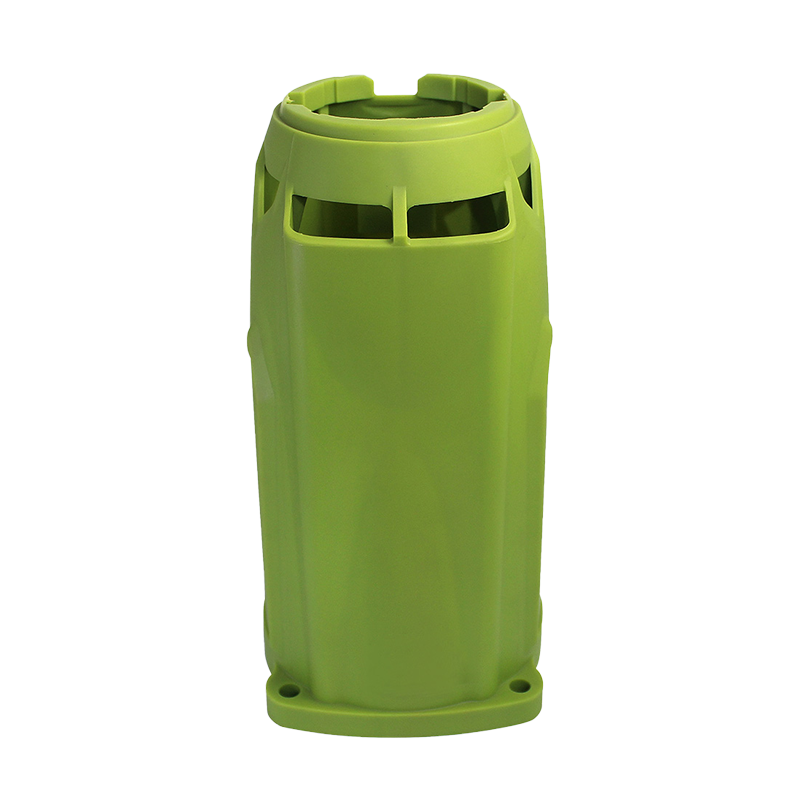
Radiator end tanks, thermostat housings, filter element supports and sensor bodies all live in an environment where under-hood air temperatures can exceed 120 °C and local surfaces run hotter. Glass-filled PA66 remains the workhorse here, with PPS and PPA taking over where continuous temperatures climb higher or where coolant and oil resistance is required. The dimensional requirement is usually the harder constraint: a filter housing that grows unevenly at temperature can leak at the seal face.
 Plastic Auto Radiator Injection Moldinginformation to be updatedView Product →
Electrical, Connector and Power Distribution Parts
Connector bodies, terminal blocks, battery holder shells, plug housings and equipment cabinets are exposed to two heat sources at once: the ambient temperature of the enclosure and the resistive heating of the conductors themselves. LCP and PPS are common choices because they combine thin-wall flow with high temperature resistance and good dielectric behaviour. The molding challenge is usually flash control, since these resins flow so readily that a poorly fitted parting line shows up immediately.
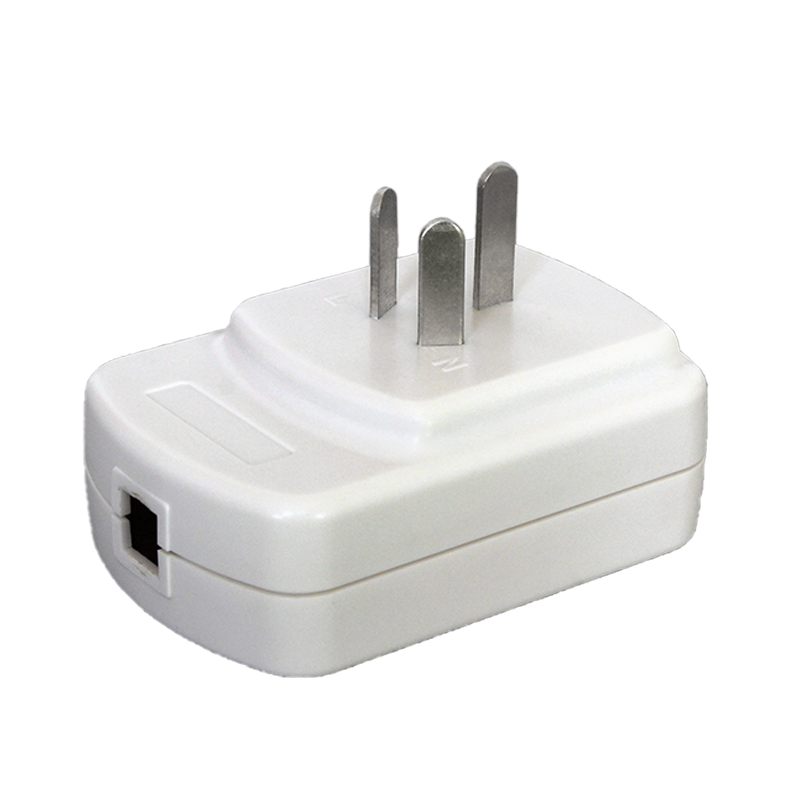
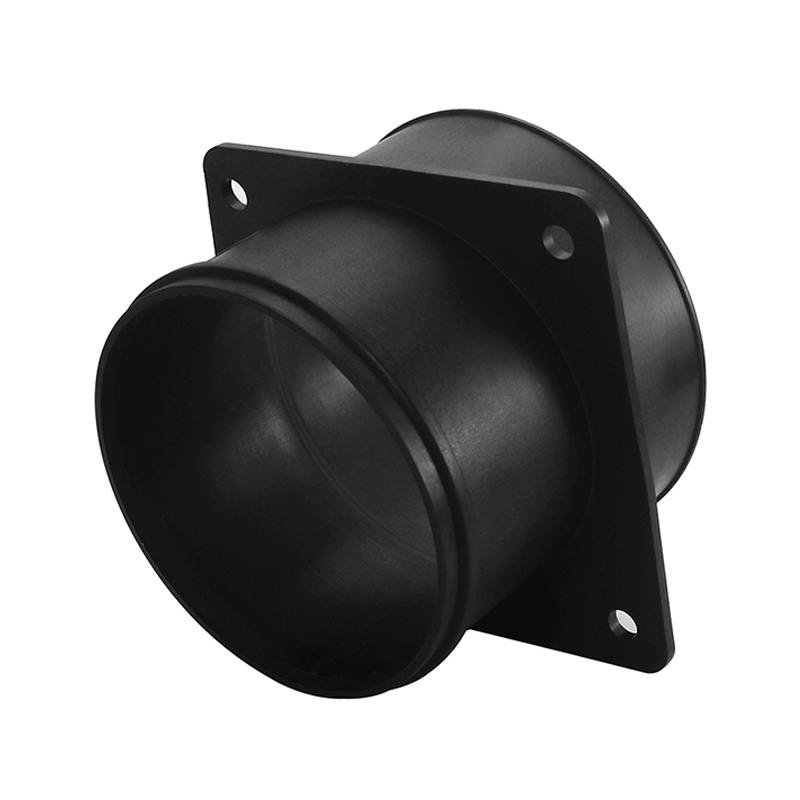 Connector AHow long can I get the feedbacks after we sent the inquiry? We will reply you within 12 hours in working day.View Product →
Industrial Instruments, Sensors and Monitoring Housings
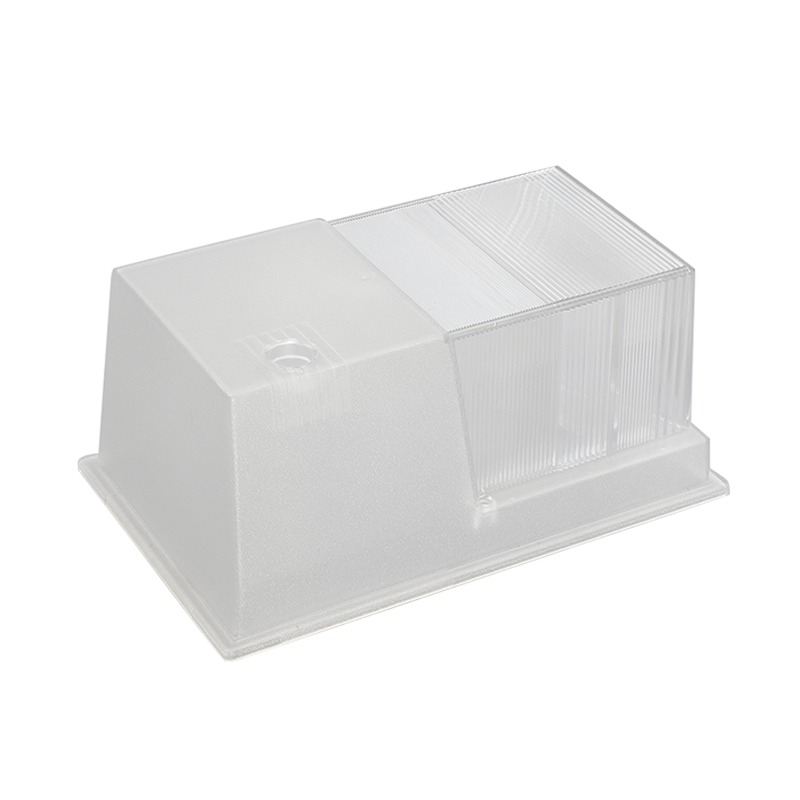
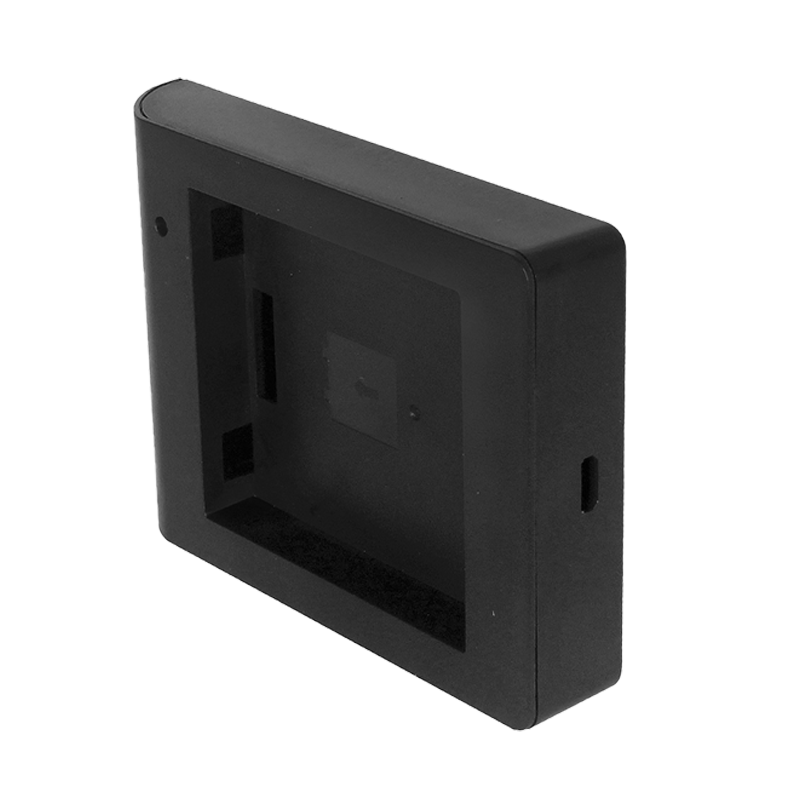
Instrument housings, detection accessories, transducer shells and monitoring enclosures are often mounted near motors, furnaces, compressors or outdoor cabinets where the internal temperature climbs well above ambient. These parts usually carry both a structural and a sealing function, so warpage is not merely cosmetic. For gas and smoke detection equipment, the enclosure also has to remain dimensionally stable enough that sensor alignment does not shift. That is a design problem as much as a materials problem, and it is worth reading through a practical example such as gas detector shell design before finalising wall sections and boss locations.
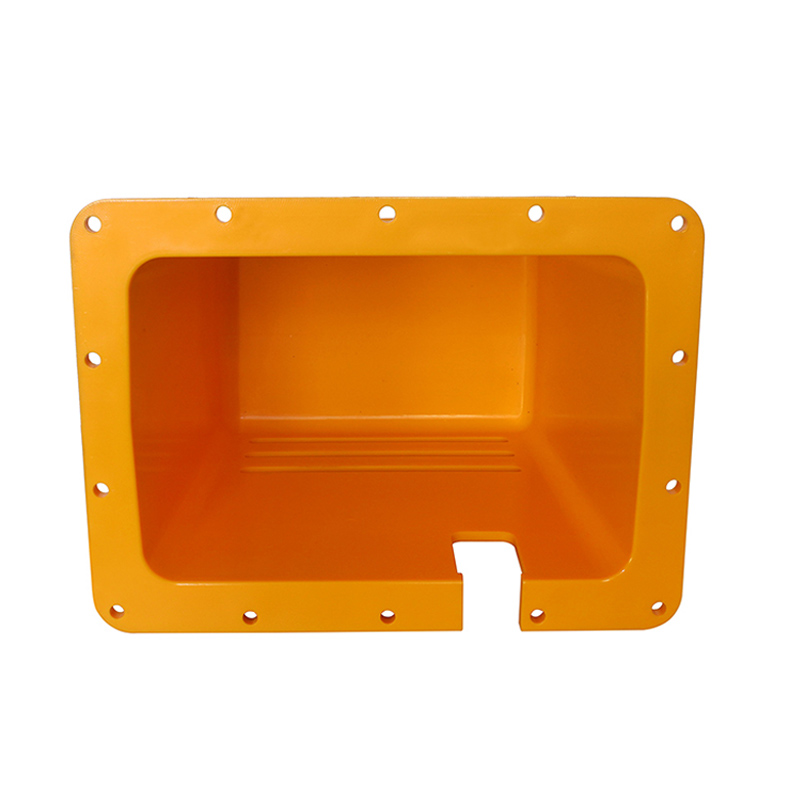 Instrument HousingHow long can I get the feedbacks after we sent the inquiry? We will reply you within 12 hours in working day.View Product →
Lighting and High Power LED Components
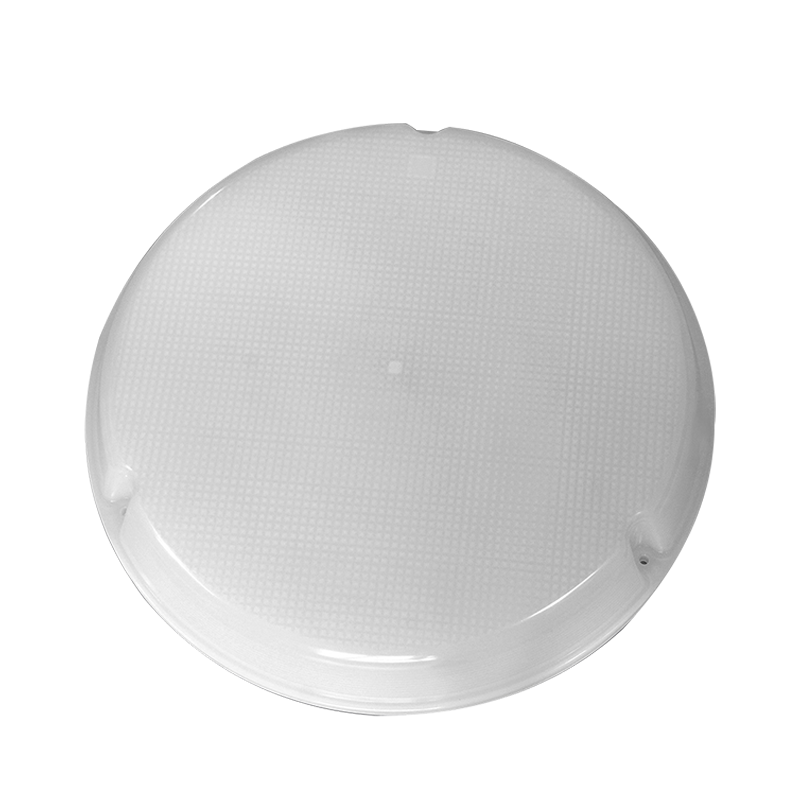
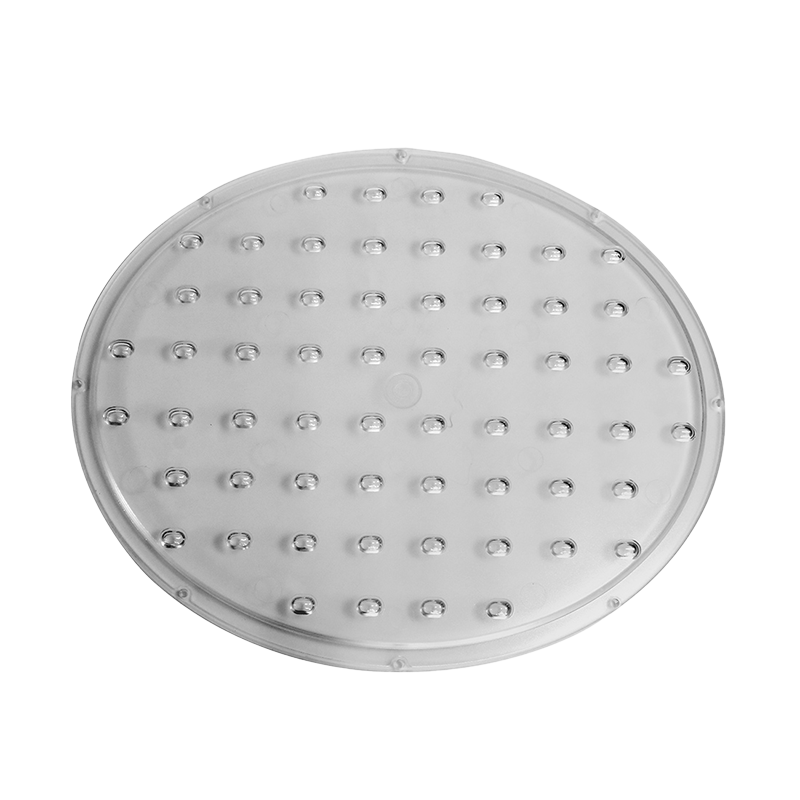
Plastic lamp shades, light diffusers and lamp holders used with high output LED modules face a combination of radiant heat and long service hours. Optical clarity, colour stability and resistance to yellowing all matter alongside the thermal rating. Where the shade sits close to the light source, the resin choice is often driven by continuous service temperature rather than by the peak temperature seen during a test.
Medical, Sterilisation and Food Contact Parts
Parts that go through steam autoclave cycles or repeated hot water washing need resins that survive both the temperature and the moisture. This is one of the areas where the difference between a general purpose and a high temperature grade becomes obvious, because a resin that performs well at 130 °C dry may lose significant strength after twenty autoclave cycles.
Industrial Automation, Robotics and IoT Enclosures
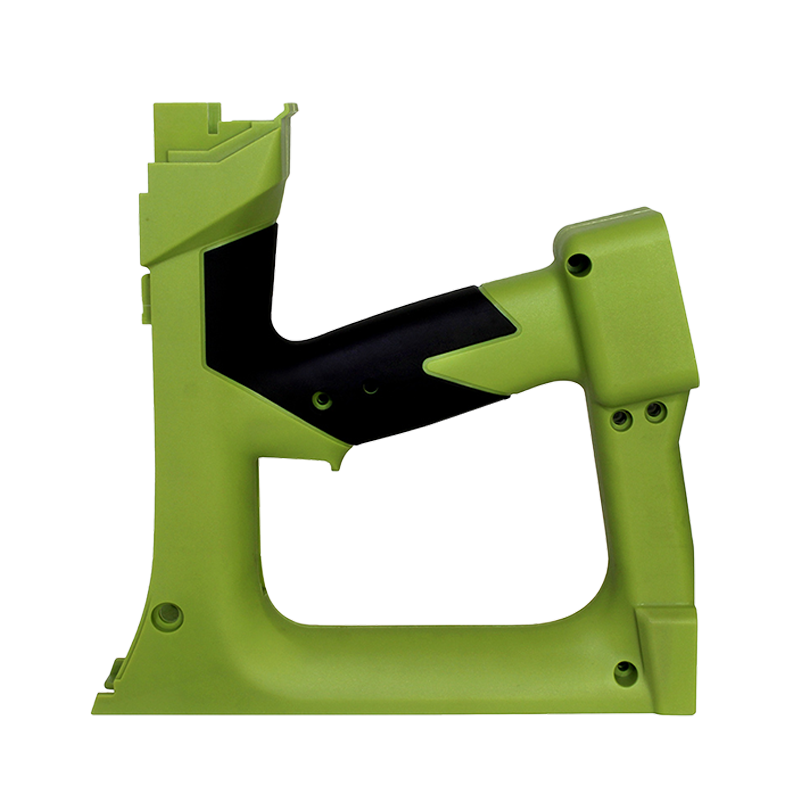
Motor housings, drive covers, robot joint shells and IoT device enclosures increasingly combine thermal requirements with cosmetic expectations. A visible cover on a machine tool has to hold its shape near a hot spindle and still look acceptable after a year on the shop floor. That combination often pushes designers toward a filled engineering resin with a matte texture rather than a glossy finish, because gloss makes every minor sink mark visible.
Quality Control, Testing and the Documentation Buyers Should Ask For
High temperature parts are harder to verify than standard molded parts, because some of the failure modes only appear after thermal exposure. A sensible quality plan combines dimensional checks with thermal and mechanical validation.
- Dimensional verification at temperature. Measuring a part at 23 °C confirms the tool is cutting correctly, but it does not confirm the part will work at 140 °C. Where the functional requirement is dimensional, a hot measurement or a verified coefficient of thermal expansion model is worth the cost.
- First article inspection with defined datum strategy. High temperature resins often show asymmetric shrinkage, so a datum scheme that worked for the prototype may not be meaningful for production. The datum scheme should be agreed before the tool is cut.
- Mechanical testing after heat ageing. Tensile or impact testing on as-molded samples is a starting point; testing after a defined ageing period at the service temperature is what actually predicts field behaviour.
- Thermal analysis of the material batch. Where crystallinity drives performance, differential scanning calorimetry on production samples shows whether the mold temperature is actually producing the crystallinity the design assumed.
- Process monitoring records. Cavity pressure traces, mold surface temperature logs and cycle time records are the evidence that a process is under control rather than merely producing acceptable parts on the day of the audit.
- Traceability by batch. For automotive, medical and industrial safety applications, the ability to trace a part back to the resin lot and the molding run is often a contractual requirement rather than a nice-to-have.
The point of this list is not to make every project complicated. It is to match the verification effort to the risk. A non-structural decorative lamp shade and a pressure-retaining filter housing should not be inspected to the same standard, and a supplier who treats them identically is either over-charging on one or under-serving the other.
Choosing a High Temperature Injection Molding Manufacturer
The supplier list for this kind of work is shorter than the list for general molding, because the equipment and the engineering capability both have to be present. A supplier who can run a PPS part at 145 °C mold temperature, hold tolerances across a year of production and document the process is not the same as a shop that quotes on price per kilogram.
Equipment Questions Worth Asking
- What is the maximum sustained melt temperature on the presses you would use for this part, and what is the corresponding shot capacity range?
- Do you have pressurised water or oil mold temperature controllers, and how many independently controlled zones can you run on one tool?
- Is the hot runner rated for the melt temperature of this resin, and who maintains and services it?
- What barrel and screw configuration is installed, and is it suitable for glass-filled or carbon-filled material?
- Which inspection equipment is available in-house, and which tests are sent out?
Engineering and Communication Questions
- Who reviews the mold design for thermal balance, gating and venting, and will we see that review before steel is cut?
- How are process parameters documented, and what happens to them if the tool is transferred or a second tool is built?
- What is the escalation path when a trial produces a defect that is not obviously explained?
- Can you provide samples and documentation for a comparable project in a similar resin?
For overseas buyers sourcing from Asia, it is also worth confirming how much of the chain sits inside one company. A manufacturer that handles product development, mold design, mold making, injection molding and final assembly under one roof has fewer handover points, and handover points are where thermal assumptions get lost. Yuyao Hualong Moulds & Plastic Products, for example, has operated from Yuyao in Zhejiang since 1988 and describes its business as an integrated flow from product development through mold design and manufacturing, injection molding and finished product assembly, with presses covering shot weights from 100 g to 3500 g and more than twenty machining centres for tool making.
Working on a high temperature part and need a realistic quote? Send the 3D model, the resin grade and the service temperature, and ask for a mold design review before pricing. That conversation usually surfaces the tooling constraints earlier than a simple per-part quotation.
Cost Drivers in High Temperature Injection Molding
High temperature projects rarely fail on price alone, but they do fail when the cost model is wrong from the start. Four drivers account for most of the difference between a standard molding quotation and a high temperature one.
Resin Cost and Minimum Order Quantity
The step from a glass-filled PA66 to PPS is meaningful; the step from PPS to PEEK is dramatic. Beyond the per-kilogram price, high temperature grades often come with higher minimum order quantities and longer lead times, which affects cash flow and inventory planning. For low-volume projects, the resin may be the single largest cost line.
Tool Steel and Heat Treatment
A tool that runs at 180 °C needs steel that holds hardness at that temperature, plus inserts that resist abrasive fillers. That typically adds a measurable percentage to the tool cost and a few days to the lead time. It is money well spent for parts with tight tolerances, but it should be an explicit line item rather than a hidden uplift.
Cycle Time and Yield
High mold temperatures mean longer cooling and, in some cases, longer packing. Cycle times can be two to three times longer than an equivalent polypropylene part. Yield also plays a role: during the first days of a high temperature trial, scrap rates can be high while the process window is being established, and a quotation that assumes steady-state yield from shot one is unrealistic.
Mold Temperature Control Energy and Maintenance
Oil units running at 180 °C consume real energy and need regular servicing. Hose and fitting replacement on a high temperature tool is a recurring cost that rarely appears in a first quotation but shows up in the total cost of ownership. Pressurised water systems generally have lower running costs where the required temperature allows them.
A sensible way to evaluate competing offers is to ask each supplier to break the quotation into tooling, resin, cycle time and yield assumptions, and then compare the assumptions rather than the totals. When two quotes differ by a large margin on a high temperature part, the difference is nearly always in one of those four items rather than in overhead.
FAQ About High Temperature Injection Molding
What temperature counts as high temperature injection molding?
There is no formal standard, but the practical line is a melt temperature above roughly 300 °C combined with a mold surface above about 100 °C. Below that, standard commodity equipment is usually adequate. Above it, barrel configuration, hot runner rating, tool steel and mold temperature control all become design decisions rather than defaults.
Can I run a high temperature resin on a standard injection molding machine?
Sometimes, but the limits arrive quickly. The barrel must be able to hold the required melt temperature with a stable profile, the screw should be suitable for the filler package, and the nozzle orifice must be large enough to avoid excessive shear. Standard water-based mold temperature controllers usually cannot hold 140 °C, so a pressurised water or oil unit is normally required as well.
Why does my high temperature part keep warping even though the dimensions are correct on the bench?
Warpage at high mold temperature usually comes from unbalanced cooling or uneven packing rather than from a dimensional error in the tool. If one side of the cavity is hotter than the other, the part will twist as it cools. Balancing the cooling circuits and verifying that mold surface temperature is uniform across the cavity normally resolves it.
How much longer is the cycle time compared with a standard resin?
For a comparable wall thickness, a two to three times longer cycle is common, mostly from the cooling phase but also from additional packing time. Some of that can be recovered by optimising cooling channel placement and by using a mold temperature controller with adequate capacity, but the difference never disappears entirely.
Is PEEK always the right choice for a high temperature application?
No. PEEK is appropriate when the continuous service temperature genuinely exceeds what PPS or PPA can deliver, or when chemical exposure rules cheaper options out. For many industrial applications that need 150 °C to 180 °C service, PPS delivers adequate performance at a much lower material cost and a more forgiving process window.
How do I know whether my supplier can actually run the process?
Ask for the maximum sustained melt temperature on the presses assigned to the job, the number of independent mold temperature control zones available, and the hot runner rating. Then ask to see a process sheet from a comparable project. A supplier who can answer all three questions with specific numbers and documents is usually equipped for the work; one who answers in general terms is not.
Does part design have to change when moving from a standard resin to a high temperature grade?
Often yes. Shrinkage values differ, especially with glass-filled semi-crystalline grades, and the flow behaviour changes. Walls that filled easily in ABS may need adjustment, draft angles may need to be slightly more generous, and gate positions may need to move to avoid weak weld lines. A design review before cutting steel is cheaper than a tool correction afterwards.
What should be included in a first article inspection for a high temperature part?
Full dimensional report against the drawing, a defined datum scheme, material batch and drying records, process parameters at the time of sampling, and where relevant, mechanical testing after a defined heat ageing period. For parts where crystallinity matters, a thermal analysis result adds useful confidence.
A high temperature part is not simply a part made in a hotter resin. It is a design that has been reconciled with the thermal behaviour of the tool, the machine and the material at the same time. Teams that treat the resin choice as the whole decision usually end up correcting a tool; teams that agree the thermal budget across resin, hot runner, tool steel and mold temperature control before cutting steel usually run their first trial close to production conditions.
The practical starting point is a short technical conversation: what temperature does the part actually see in service, for how long, and with what chemical exposure. Those three answers narrow the resin list quickly, and once the resin is fixed, the equipment, tooling and process requirements follow almost automatically. Getting that conversation right at the quotation stage costs far less than discovering it during a production ramp.